
Top 10 Azure cost optimization tools and strategies in 2026
You're overspending on Microsoft Azure, and you know it. In this guide, you'll learn 10 proven tools and strategies to reduce your Azure costs significantly without sacrificing performance or reliability.
Here's what you need to know to start cutting your Azure bill today:
- Use Azure Spot VMs and right-sizing for compute workloads to cut costs by up to 90%
- Implement reserved instances or savings plans for predictable workloads running continuously
- Enable storage lifecycle policies to automatically tier data between hot, cool, and archive storage
- Optimize Azure Kubernetes Service with autoscaling and spot node pools
- Leverage Azure native tools like Cost Management + Billing and Azure Advisor for visibility
- Consider platforms like Northflank that handle optimization while deploying in your own Azure account
A recommended solution for Azure cost optimization: Instead of managing Azure infrastructure manually, Northflank's Bring Your Own Cloud approach deploys directly into your Azure subscription and AKS clusters. You keep your reserved instances and credits while Northflank handles spot VM orchestration, right-sizing, and autoscaling. Teams typically see significant cost reductions within the first month.
Azure cost optimization is the process of reducing your Microsoft Azure spending while maintaining the performance and reliability your applications need.
It involves identifying wasted resources, right-sizing infrastructure to match actual usage, and selecting cost-effective pricing models for your workloads.
This includes finding idle virtual machines, over-provisioned databases, unnecessary storage in expensive tiers, and opportunities to use discount pricing like reserved instances or spot VMs.
Effective optimization happens continuously through automation rather than quarterly manual reviews, ensuring every dollar you spend on Azure supports your business objectives.
Understanding how Microsoft Azure prices its services helps you identify where you're overspending and which optimization strategies will deliver the biggest impact.
Key pricing models:
- Pay-as-you-go: The default pricing model with maximum flexibility but highest cost, billed per second for most compute services (with a one-minute minimum for VMs)
- Reserved instances: Commit to one or three years for up to 72% discount on VMs, databases, and other services
- Azure savings plans: Commit to hourly spending for one or three years and get up to 65% discount with more flexibility than reserved instances
- Spot VMs: Up to 90% less than standard pricing with 30-second termination notice when capacity is needed elsewhere
- Azure Hybrid Benefit: Use existing on-premises Windows Server and SQL Server licenses on Azure for up to 85% savings
Understanding these pricing models helps you select the right approach for each workload instead of defaulting to expensive pay-as-you-go pricing.
Your uncontrolled Azure costs are forcing difficult budget conversations and limiting what your team can accomplish.
Common waste patterns:
- Idle virtual machines running 24/7 when only needed during business hours
- Over-provisioned SQL databases using a fraction of their capacity
- Forgotten storage in hot tiers when it should be in cool or archive
- Unoptimized queries scanning unnecessary data in Azure services
The business impact:
Wasted spend reduces your budget for hiring and building features. Your team spends time managing infrastructure instead of focusing on work that drives business value.
Effective cost optimization frees up budget for innovation, improves productivity, and gives you clear visibility into spending.
This is where platforms like Northflank help by handling optimization continuously while you maintain full control of your Azure subscription, ensuring your investment delivers maximum value.
Even with Azure's transparent pricing, you're likely struggling with optimization challenges that prevent you from reducing costs effectively.
Common challenges:
- Complexity of pricing models: Understanding when to use spot VMs versus reserved instances and which savings plan fits different workloads creates decision paralysis
- Lack of visibility: Managing multiple subscriptions makes it nearly impossible to pinpoint which teams or applications drive your costs without proper tagging
- Manual optimization doesn't scale: Reviewing Azure Advisor suggestions and right-sizing resources consistently across your infrastructure while shipping features isn't realistic
These challenges are why the right tools make such a significant difference in achieving sustained cost reduction.
Not all cost optimization tools work the same way, and choosing the wrong approach can create more problems than it solves.
Key factors to evaluate:
- Maintains your Azure relationship: Deploy in your own Azure subscription to keep reserved instances, credits, and your existing Microsoft relationship
- Level of automation: Decide between monitoring tools with manual recommendations versus platforms that handle optimizations continuously
- Visibility and reporting: Ensure clear visibility into actions taken and savings achieved with detailed cost allocation
- Ease of implementation: Consider setup time and expertise required, some tools need weeks while others deploy quickly
Choose based on your team's capacity for ongoing infrastructure management and how much time you want to spend on optimization versus building your product.
Here are the 10 most impactful ways to reduce your Azure costs, from quick wins you can implement today to automated solutions that deliver ongoing savings.
Your Azure virtual machines likely represent the largest portion of your bill.
- Spot VMs: Microsoft Azure's interruptible instances cost up to 90% less than standard VMs. Spot VMs provide 30-second termination notice when capacity is needed elsewhere, making them perfect for batch processing, CI/CD pipelines, machine learning training, and fault-tolerant systems.
- Right-sizing VMs: Use Azure Advisor for machine learning-based resizing suggestions based on actual usage. Most teams over-provision for peak capacity rather than typical usage, wasting money on unused resources.
Platforms like Northflank handle both spot VM management and right-sizing with instant failover and continuous optimization.
Reserved instances and savings plans provide substantial discounts when you commit to using specific resources for one or three years.
- Reserved instances: Commit to specific VM sizes and regions for up to 72% discount. Best for predictable workloads like production databases and core services.
- Savings plans: Commit to hourly spending with more flexibility than reserved instances for up to 65% discount. You can use any VM size within your committed spending limit.
Use these for workloads running continuously. Avoid them for development environments where usage might change. Start with one-year commitments before committing to three years.
Azure Storage costs compound quickly when storing terabytes of data.
- Storage tiers: Hot for frequent access, Cool for monthly access, Cold for quarterly access, and Archive for yearly access. Each tier costs progressively less with higher retrieval fees.
- Lifecycle policies: Automatically transition blobs between tiers or delete them based on age. Move to Cool after 30 days, Cold after 90 days, and Archive after one year.
Use regional storage when global distribution isn't necessary and clean up incomplete multipart uploads.
Manual AKS capacity management leads to overspending when teams over-provision node pools for peak capacity.
- Cluster autoscaler: Automatically adds or removes nodes based on pod requirements, eliminating idle nodes during low-traffic periods.
- Spot node pools: Use spot VMs for fault-tolerant workloads while maintaining standard nodes for critical services.
- Pod resource limits: Set accurate CPU and memory requests so AKS can pack pods efficiently.
Northflank deploys into your AKS clusters and handles spot node orchestration, right-sizing, and intelligent autoscaling.
Without autoscaling, you're paying for peak capacity continuously even during low traffic.
- Horizontal autoscaling: Scales the number of VM instances or pods based on demand.
- Vertical autoscaling: Adjusts CPU and memory allocations based on actual usage.
Configure autoscaling policies carefully to avoid aggressive scaling. Use meaningful metrics like request count or response time for intelligent scaling decisions.
Azure databases are among the most expensive resources, making optimization essential.
- Select the right pricing model: Choose between vCore (constant workloads) and serverless compute (workloads with long inactive periods).
- Elastic pools: Share resources between databases with flexible demand instead of dedicating them separately.
- Savings plans: Apply savings plans to database workloads for substantial discounts on predictable usage.
Monitor query performance to identify expensive operations that can be optimized.
Forgotten resources cost money while delivering zero value.
Use Azure Advisor to identify idle VMs, unattached disks, old snapshots, and unused static IP addresses.
Schedule automatic shutdown for development and staging environments during nights and weekends. Delete snapshots older than compliance requirements. Clean up resources systematically.
Without proper tagging, you can't identify which teams, projects, or environments drive your costs.
Label all resources with environment, team owner, project name, and cost center. Use Cost Management + Billing with tags to analyze spending and create accountability.
Make tagging part of your infrastructure-as-code templates so it happens automatically.
Microsoft Azure provides free native tools to monitor and reduce spending.
- Cost Management + Billing: Track costs across subscriptions, services, and resources with detailed analysis and budgeting.
- Azure Advisor: Get machine learning-based recommendations for right-sizing, reserved instances, and identifying idle resources.
- Azure Pricing Calculator: Estimate costs before deploying resources to plan budgets and compare configurations.
- Azure Monitor: Track resource utilization metrics to identify waste.
These tools identify problems but you still need to implement fixes manually.
The challenge isn't knowing what to do; it's doing it consistently while your team focuses on building products.
Platform solutions handle the optimizations you should implement but don't have time for. Find one that deploys in your Azure subscription so you keep your existing reserved instances and credits.
Northflank's Bring Your Own Cloud approach deploys into your AKS clusters, handling optimization for spot VMs, right-sizing, and autoscaling while you focus on features that drive business value.
You've learned 10 strategies for reducing Azure costs, but implementing them consistently while shipping features requires either a dedicated team or the right automation.
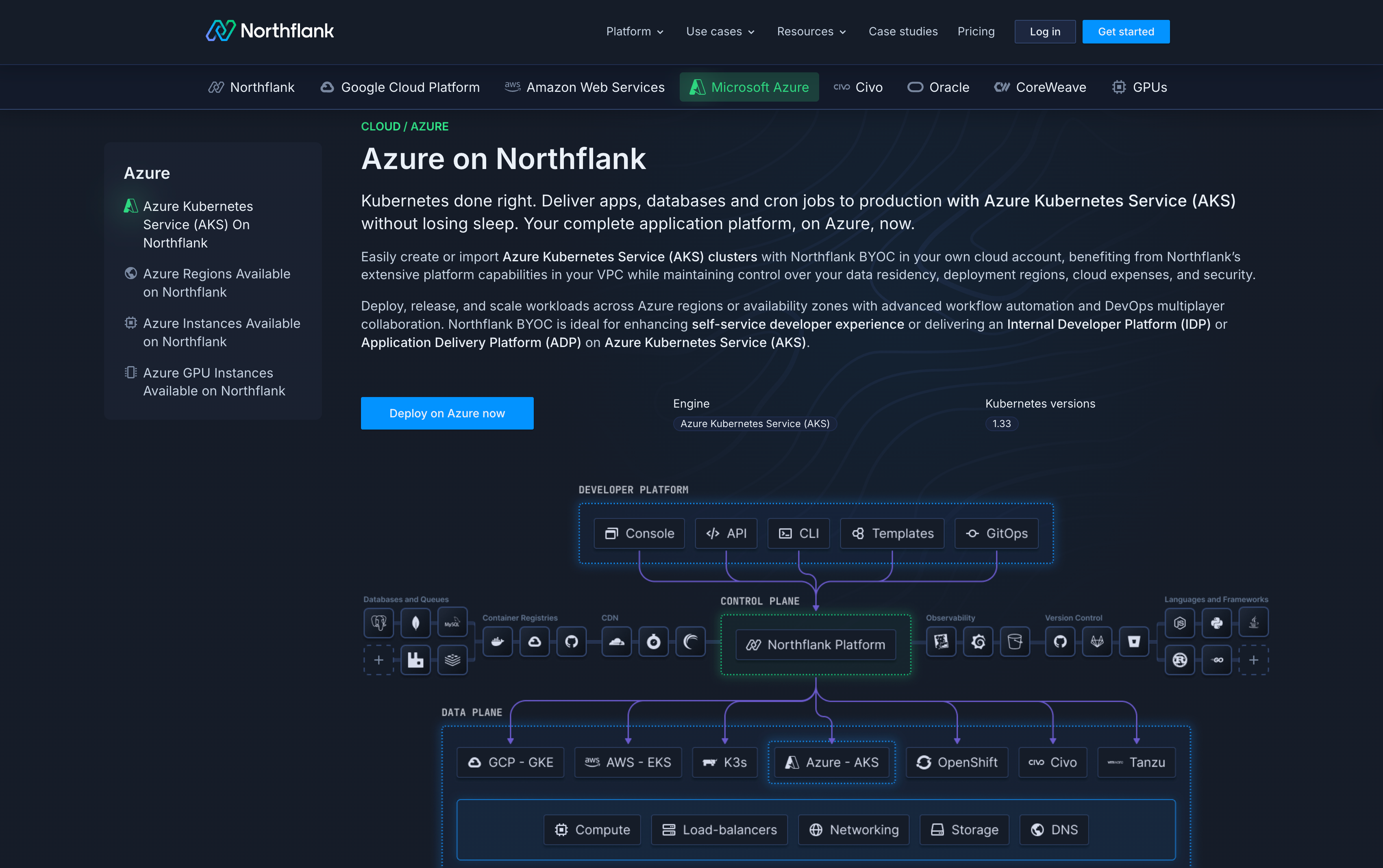
Northflank deploys directly into your own Azure subscription and AKS clusters, so you're not migrating infrastructure or changing cloud providers.
You're adding an intelligent automation layer that handles optimization while you maintain complete control over your infrastructure.
What you keep:
- Your Azure subscription and relationship with Microsoft
- Reserved instances and savings plans
- Azure credits or enterprise agreements
- Your VNet, security posture, and compliance certifications
- Full visibility into all resources and costs in your Azure portal
- Spot VM orchestration with zero-downtime failover: Northflank manages spot VMs across multiple zones and machine types. When Azure sends a termination notice, it instantly fails over to standard instances so your applications stay running while you capture spot savings.
- Continuous right-sizing: Instead of quarterly reviews that quickly become outdated, Northflank monitors your actual resource usage in real-time and adjusts allocations automatically as your needs change.
- Intelligent autoscaling: The platform learns your traffic patterns and scales resources to match real demand, not guesses about capacity you might need.
- Automated resource cleanup: Northflank identifies and removes unused resources like old snapshots and unattached disks before they accumulate into significant waste.
- Multi-cloud optionality: Start with Azure and expand to AWS or GCP later without vendor lock-in. Learn more about cloud cost optimization across multiple providers to maintain flexibility as your needs evolve.
You'll see the biggest impact if you're spending significant amounts monthly on Azure, have a small DevOps team stretched across multiple priorities, run variable workloads with fluctuating traffic patterns, or are running workloads on AKS that need continuous optimization.
Calculate your potential savings at northflank.com/pricing or check out how Northflank works with Azure at northflank.com/cloud/azure.