
What is cloud repatriation and why are companies doing it in 2026?
Cloud repatriation has become one of the most significant infrastructure trends of 2026. Companies that migrated aggressively to public cloud providers like AWS, Azure, and GCP are now moving workloads back to private infrastructure, on-premises data centers, or cheaper cloud alternatives.
The primary driver? Cost. Organizations are discovering they can reduce infrastructure spending by 30-60% through strategic repatriation while maintaining the performance and reliability their applications need.
But here's the challenge most companies face: traditional repatriation means losing the developer experience, automation, and platform capabilities that made public cloud attractive in the first place. You're forced to choose between cost savings and operational efficiency.
You shouldn't have to make that trade-off.
This guide explains what cloud repatriation means, why it's accelerating in 2026, and how modern platform approaches let you capture cost savings without sacrificing developer velocity or operational capabilities.
What it is: Moving workloads from public cloud providers (AWS, Azure, GCP) back to private infrastructure, on-premises data centers, or lower-cost cloud alternatives like Hetzner, OVH, or Civo.
Why companies do it:
- Reduce infrastructure costs by 30-60%
- Gain better control over data and compliance
- Improve performance for specific workloads
- Avoid unpredictable cloud billing
The challenge: Traditional repatriation means losing platform automation, developer self-service, and operational simplicity.
The solution: Use platforms like Northflank that let you bring your own cloud infrastructure while maintaining AWS-like developer experience and automation. You get the cost savings of cheaper infrastructure with the operational benefits of a modern platform.
Key takeaway: Cloud repatriation isn't about abandoning cloud principles. It's about choosing infrastructure that delivers better economics while preserving the capabilities your engineering teams need.
Cloud repatriation is the process of moving applications, data, and workloads from public cloud providers back to private infrastructure, on-premises data centers, or alternative cloud environments.
Companies typically repatriate workloads for three main reasons: reducing costs, improving control over data and infrastructure, or optimizing performance for specific use cases.
Modern repatriation isn't necessarily a return to traditional on-premises infrastructure. Many companies are moving to lower-cost cloud providers, colocation facilities, or hybrid architectures that combine multiple infrastructure sources.
Cloud repatriation doesn't mean abandoning cloud principles like automation, scalability, and self-service. The goal is to maintain these capabilities while choosing infrastructure that better aligns with your economic and operational requirements.
The reasons driving cloud repatriation in 2026 reflect both the maturity of cloud adoption and changing economic realities.
Infrastructure costs are the primary driver of repatriation. Public cloud pricing models that seemed attractive initially often become expensive at scale. Companies with stable workloads discover they're paying a premium for flexibility they don't use. AI and data-intensive workloads intensify this challenge, with GPU costs making alternative infrastructure economically necessary.
Some organizations need direct control over their infrastructure for regulatory, security, or governance reasons. Certain industries face data residency requirements that are simpler to satisfy with infrastructure you control directly. Control also lets you tune hardware, networking, and storage configurations precisely for your workload characteristics.
Certain applications perform better on dedicated infrastructure. Database workloads with consistent high I/O demands, real-time processing systems, and applications requiring low-latency access to large datasets often benefit from infrastructure optimized specifically for those patterns.
Cost savings from cloud repatriation typically range from 30-60% of infrastructure spending, with the actual amount depending on workload characteristics, scale, and implementation approach.
The savings come from several sources:
- No data transfer fees (often 15-20% of cloud bills)
- Avoided premium pricing for on-demand flexibility
- Infrastructure precisely matched to your needs
For compute-intensive workloads, the economics are particularly compelling. A dedicated server from providers like Hetzner costs a fraction of equivalent AWS or GCP instances. GPU infrastructure shows similar patterns, with alternatives often costing 50-70% less for equivalent performance.
However, these raw infrastructure savings must account for operational costs. Managing your own infrastructure requires expertise, monitoring, maintenance, and tooling.
This is where platform approaches become valuable. Northflank lets you capture infrastructure cost savings while automating operational complexity through bring-your-own-cloud (BYOC), built-in autoscaling, ephemeral preview environments, spot instance orchestration, and developer self-service capabilities.
Cloud repatriation introduces several challenges that organizations must address for successful execution.
- Loss of operational capabilities: Losing the developer experience and automation that made public cloud attractive creates friction. Platform solutions that work across infrastructure providers help maintain capabilities while changing economics.
- Capacity planning and scaling challenges: Planning capacity without elastic scaling means accepting that growth requires lead time. Hybrid architectures can handle occasional burst capacity needs.
- Technical complexity and expertise requirements: Managing infrastructure means networking, storage, and security become your responsibility. Organizations either build platform teams or use platforms that abstract this complexity.
- Migration execution risk: Moving production workloads carries risk from provider-specific dependencies and data migration complexity. Most companies repatriate incrementally, starting with non-critical workloads.
Cloud repatriation follows a structured process that minimizes risk while maximizing the benefits of infrastructure change.
- Assessment and planning phase: Analyze your current cloud spending and workload characteristics. Identify which applications are driving costs and evaluate whether they're good candidates for repatriation. Calculate total cost of ownership for 3-5 years, including hardware, colocation, networking, and operational overhead.
- Infrastructure selection and setup: Choose infrastructure that matches your technical requirements and economic goals. Alternative cloud providers like Hetzner, OVH, or Civo offer compelling economics without requiring physical infrastructure management.
- Application migration execution: Migrate applications in phases based on risk and complexity. Start with development and staging environments, then move non-critical production workloads, and finally migrate increasingly important systems. Maintain parallel infrastructure during migration to enable quick rollback.
- Operational optimization: After migration, optimize your infrastructure for cost and performance. Build self-service capabilities so development teams can deploy and manage applications without manual intervention. Running platforms like Northflank on your own infrastructure gives you the automation and developer experience of public cloud while maintaining cost advantages.
The most successful cloud repatriation strategies avoid the false choice between cost savings and operational capabilities.
Modern platforms let you maintain AWS-like developer experience while running on infrastructure you control. This approach captures cost savings without forcing teams back to manual infrastructure management.
Northflank's bring-your-own-cloud model demonstrates this pattern. You connect your own Kubernetes clusters running on Hetzner, bare metal, or any infrastructure provider. Northflank provides the platform layer: deployment automation, built-in autoscaling, monitoring, ephemeral preview environments, and developer self-service.
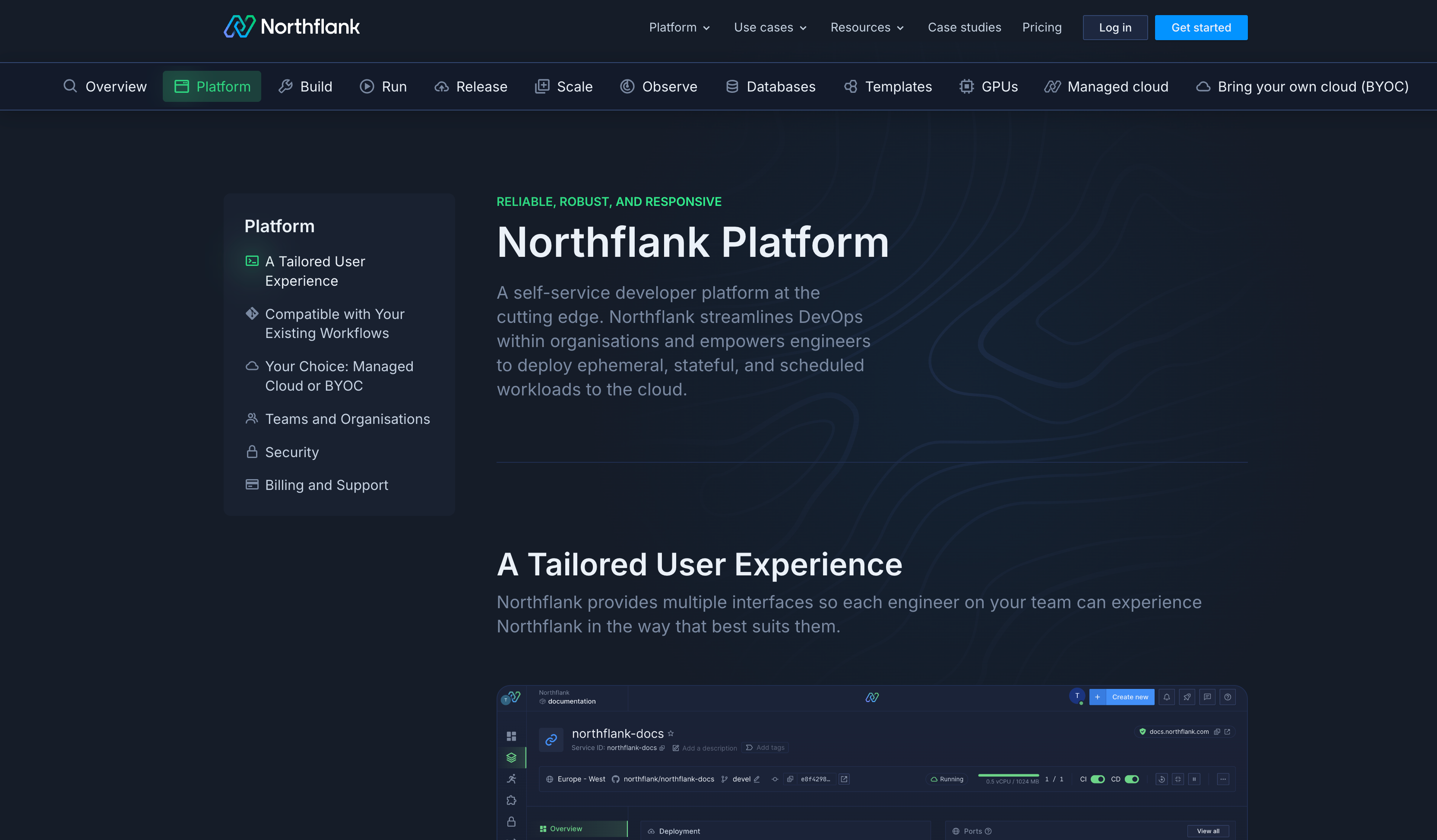
Your developers interact with a polished platform interface while you capture 30-60% infrastructure cost savings without changing deployment workflows.
Rather than repatriating everything, many companies adopt hybrid architectures. Baseline workloads run on cost-effective infrastructure while variable workloads use public cloud flexibility. Platforms that work across infrastructure providers maintain consistent deployment processes and developer experience.
Successful repatriation happens in stages, not big-bang migrations. Start with workloads that have stable resource requirements, high cost, and minimal dependencies on provider-specific services. Validate each phase by measuring performance, cost savings, and operational overhead before proceeding.
Compare infrastructure costs and operational overhead honestly. Repatriation delivers value when total cost of ownership is lower, not when raw infrastructure is cheaper but operational costs explode. Platforms reduce operational overhead by automating tasks and improving developer productivity.
Start your cloud repatriation with Northflank
See how Northflank's bring-your-own-cloud (BYOC), built-in autoscaling, ephemeral preview environments, and spot instance orchestration let you capture infrastructure cost savings while maintaining platform automation and developer experience.
Try Northflank or talk to our team about your repatriation strategy.
Cloud repatriation makes sense for specific situations and workload types.
You're a good candidate if you're running stable, predictable workloads at meaningful scale. Companies spending $50,000+ monthly on cloud infrastructure typically find compelling economics in alternative approaches.
Repatriation works well when you have technical expertise in-house or are willing to use platforms that handle operational complexity. Data-intensive applications and AI/ML workloads often benefit significantly when GPU costs, storage volumes, or data transfer fees dominate your cloud bill.
Early-stage startups and small teams should usually stick with public cloud. The operational overhead makes sense only when costs justify the effort. If your workloads are genuinely variable and unpredictable, public cloud's elastic scaling may be worth the premium.
Many organizations find the optimal approach combines public cloud and self-managed infrastructure. Use cost-effective infrastructure for baseline workloads while maintaining public cloud for specific use cases where it excels. Modern platforms make hybrid architectures practical with consistent deployment processes across infrastructure types.
Cloud repatriation means moving applications and data from public cloud providers like AWS, Azure, or GCP back to private infrastructure, on-premises data centers, or alternative cloud environments. Companies typically repatriate to reduce costs, improve control, or optimize performance.
Companies move away from public cloud primarily to reduce infrastructure costs. Other drivers include a desire for better control over data and infrastructure, compliance requirements, and performance optimization for specific workloads. Most organizations adopting repatriation are seeking 30-60% cost savings.
Cloud repatriation timelines vary widely based on workload complexity and scale. Simple applications can migrate in weeks while complex systems may take months. Most organizations adopt phased approaches, migrating incrementally over 6-18 months.
Yes, hybrid approaches are common and often optimal. Many companies repatriate baseline workloads to cost-effective infrastructure while maintaining public cloud for variable workloads or applications that benefit from provider-specific services.
Developer productivity can suffer if repatriation means losing platform automation and self-service capabilities. Organizations maintain productivity by using platforms that provide AWS-like developer experience on any infrastructure.
Traditional repatriation requires significant infrastructure expertise: networking, storage management, Kubernetes operations, and security hardening. However, platforms like Northflank that abstract this complexity reduce expertise requirements substantially.
Measure repatriation success through total cost of ownership (infrastructure plus operational costs), application performance metrics, developer productivity, and business outcomes. Successful repatriation reduces costs by 30-60% while maintaining or improving performance.