
Best e-commerce hosting platforms in 2026
Quick summary: Best e-commerce hosting ranges from simple setup platforms to scalable infrastructure for custom applications.
For development teams from solo technical founders to enterprise engineering teams building unique online stores that need to scale, Northflank provides complete cloud hosting and infrastructure management, including databases, automated deployments, and traffic scaling with transparent usage-based pricing.
The article also covers e-commerce-specific platforms like Shopify, BigCommerce, and WooCommerce.
Choosing ecommerce hosting determines whether your online store loads in 2 seconds or 6, handles 100 orders per day or 10,000, and scales efficiently as you grow.
But "best ecommerce hosting" means different things at different stages. A merchant launching their first store with an all-in-one platform needs different infrastructure than a development team deploying headless commerce with Next.js and TypeScript.
This guide breaks down e-commerce hosting options from simple setup platforms to scalable infrastructure, covering when each approach makes sense.
The answer depends on what you're building and your team's structure.
Northflank lets development teams from solo technical founders to enterprises build and scale custom ecommerce platforms that handle everything from 100 to 100,000+ orders per day.
You can deploy across Northflank's managed cloud or your own cloud with AWS, GCP, Azure, Oracle, CoreWeave, on-premises, or bare-metal infrastructure.
The platform manages databases, automated deployments, monitoring, and scaling while giving developers complete flexibility to build unique shopping experiences like custom storefronts, headless commerce systems, or white-label platforms that can serve multiple brands from one codebase.
Shopify and BigCommerce are built specifically for online stores with product catalogs, checkout systems, and payment processing included as core features. These work well for standard retail workflows but use template-based designs and predetermined feature sets.
Managed WordPress hosts like WP Engine and Bluehost provide WordPress-optimized infrastructure for teams building WooCommerce stores. These are designed specifically for the WordPress ecosystem and WooCommerce plugin architecture.
The key differentiator is specialization versus flexibility.
E-commerce-specific platforms optimize for standard online retail workflows and work best when your store fits their template model.
Complete cloud hosting platforms like Northflank provide managed infrastructure with flexibility to build any e-commerce architecture, from simple storefronts to complex multi-tenant systems, while handling operational complexity like autoscaling, database management, and zero-downtime deployments.
Understanding key features helps you evaluate platforms and make informed decisions for your business.
- Security: SSL certificates encrypt customer data during transmission and come standard with modern hosting.
- Performance: Server response times affect conversions and search rankings. Look for CDN integration, database optimization, and the ability to scale resources during traffic spikes.
- Deployments: Managed platforms handle updates through their interface. Developer platforms like Northflank use git-based workflows where code pushes trigger automatic deployments and enable preview environments for testing.
- Database management: Managed platforms include database hosting. Developer platforms provide managed database options (PostgreSQL, MongoDB, Redis, MySQL) with automatic backups and scaling.
- Support: Managed platforms offer 24/7 customer support. Developer platforms provide infrastructure support while you handle application decisions.
- Integrations: Managed platforms offer app marketplaces. Developer platforms provide API access for custom integrations.
Modern e-commerce spans a spectrum from all-in-one platforms for beginners to sophisticated infrastructure for custom applications. Each approach serves different needs and team structures.
Northflank is a complete cloud hosting platform for scalable ecommerce that lets technical teams deploy and scale containerized applications across multiple cloud providers without managing Kubernetes directly.
Best for: Development teams building custom e-commerce platforms, headless commerce implementations, teams migrating from Heroku, SaaS, or multi-tenant storefronts, and engineering teams where infrastructure control is a competitive advantage
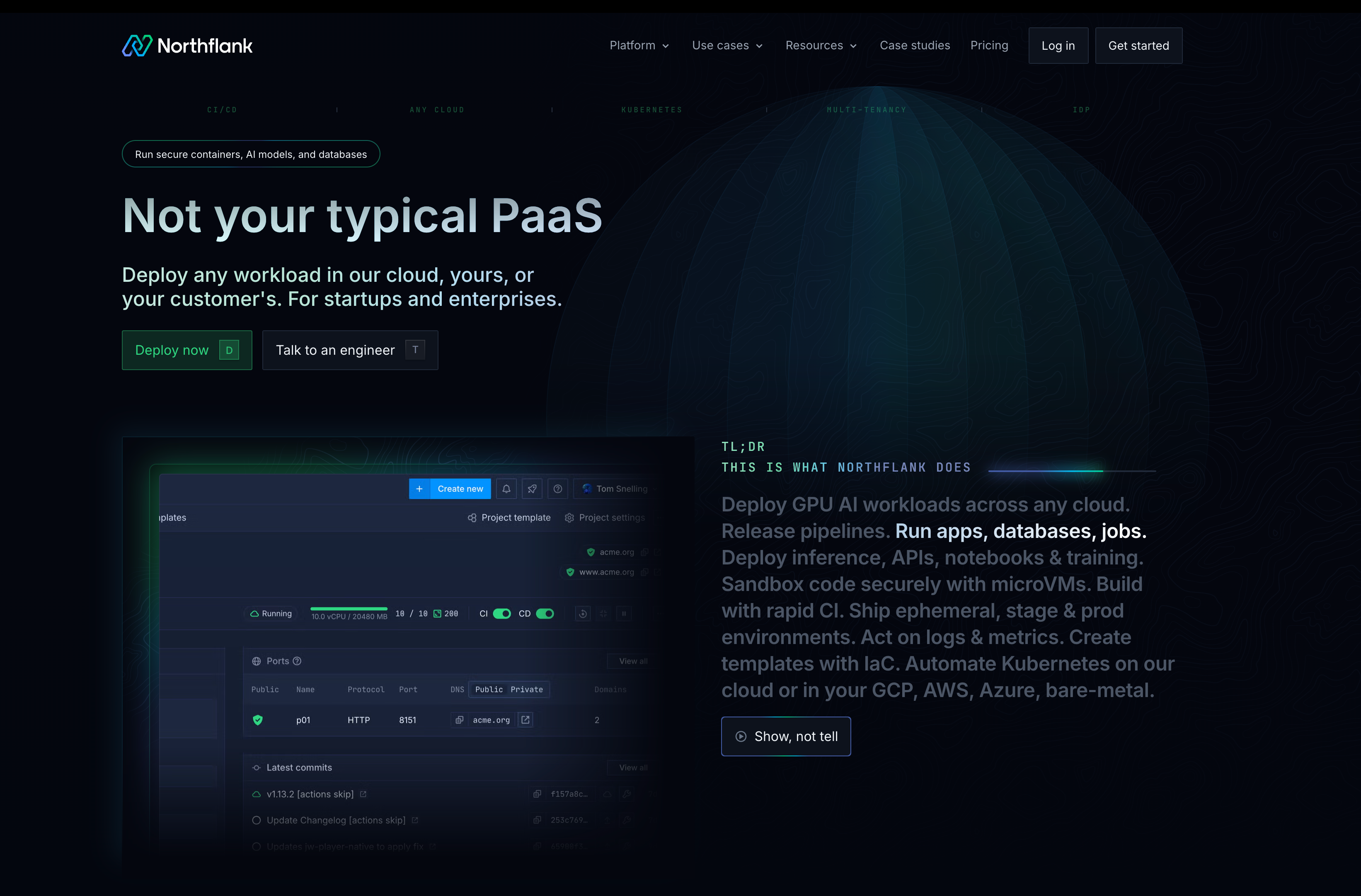
Why businesses and teams choose Northflank for e-commerce hosting
Northflank provides complete e-commerce hosting infrastructure that handles deployments, databases, and scaling without requiring dedicated DevOps engineers. Host custom storefronts built with Next.js, headless commerce platforms like Vendure or Medusa, or ecommerce applications using Node.js and Python with databases like PostgreSQL, MongoDB, and Redis.
Hosting capabilities:
- Automated deployments - Push code to GitHub, and Northflank automatically deploys your e-commerce store with zero downtime.
- Database hosting - Host PostgreSQL, MongoDB, Redis, or MySQL within your infrastructure. Store product data, transactions, and catalogs with automatic backups and scaling.
- Preview environment - Test new checkout flows and payment integrations in automatically created staging environments before going live.
- Traffic-based scaling - Your hosting automatically scales during flash sales and high-traffic periods based on actual demand.
- Host in your own cloud - Deploy ecommerce hosting to your AWS, GCP, Azure, Civo, Oracle, CoreWeave, on-premises, or bare-metal infrastructure while keeping data in your VPC.
Additional hosting features:
- Host separate services for product catalogs, payments, and order fulfillment
- Schedule automated tasks for inventory updates and customer emails
- Built-in monitoring and alerting for your hosted applications
- Template-based hosting for deploying complete e-commerce environments instantly
Pricing structure
Northflank offers transparent usage-based pricing with three tiers:
Free Sandbox tier: Get started at no cost with always-on compute, 2 free services, 2 free databases, and 2 free cron jobs, perfect for testing and building trust with the platform.
Pay-as-you-go tier: Self-service with minimal restrictions and no salesperson needed. Pay only for what you consume:
- Compute: $0.01667 per vCPU per hour, $0.00833 per GB memory per hour
- Storage: $0.15 per GB per month for NVMe disks
- Networking: $0.06 per GB for data transfer
- Databases: Managed PostgreSQL, MongoDB, Redis, and MySQL included
Enterprise tier: Custom requirements, SLAs, white-label options, and always-on support with volume discounts, annual commitments, and the ability to run in your VPC across AWS, GCP, Azure, Oracle, Civo, CoreWeave, on-premises, or bare-metal infrastructure.
Pricing scales linearly with your resource usage. Use the pricing calculator to estimate costs based on your specific requirements.
With Bring Your Own Cloud (BYOC), you pay a platform fee and consume compute resources through your own cloud provider, leveraging existing credits or committed use agreements for additional cost savings.
When Northflank makes sense for e-commerce hosting
Choose Northflank for e-commerce hosting if you're:
- Building or hosting custom e-commerce platforms with modern frameworks like Next.js, Vue, or headless commerce systems like Vendure and Medusa
- Outgrowing Heroku's pricing constraints and needing better economics at scale
- Running a multi-tenant ecommerce where each customer needs an isolated infrastructure
- Need preview environments for testing new features before production
- Want infrastructure control without hiring Kubernetes experts
- Require a scalable e-commerce infrastructure where your technical architecture is a competitive advantage
Start hosting on Northflank with the free sandbox tier, see the Vendure deployment guide for deploying modern commerce frameworks on Northflank, or talk to an engineer to discuss your specific infrastructure requirements.
Shopify is an all-in-one e-commerce platform that handles hosting, payment processing, inventory management, and storefront in a single system. The platform includes templates, checkout flows, and shipping integrations designed to get stores online quickly. Shopify works through a subscription model with different tiers based on business size and feature requirements.
Typical users: First-time merchants, physical product sellers, businesses without technical resources
Key features:
- Built-in payment processing
- Mobile app for management
- App marketplace for extensions
- Template-based storefront design
- Integrated shipping tools
BigCommerce is an e-commerce platform that includes features like B2B tools and multi-channel selling as standard, reducing dependency on third-party apps. The platform provides product catalog management, order processing, and marketing tools within the base subscription. BigCommerce supports selling across multiple channels, including Amazon, eBay, and social media platforms, from a single dashboard.
Typical users: Growing businesses, B2B sellers, merchants needing native B2B and multi-channel capabilities
Key features:
- Multi-channel selling
- Native B2B functionality
- SEO features
- Product catalog management
- Integrated marketing tools
Bluehost provides WordPress hosting with WooCommerce optimization for stores built on WordPress. The hosting includes server configurations optimized for WordPress performance and WooCommerce plugin compatibility. Bluehost handles the hosting infrastructure while you manage the WordPress site and WooCommerce configuration through the WordPress admin panel.
Typical users: WordPress users, content-focused stores, bloggers adding ecommerce to existing sites
Key features:
- One-click WooCommerce installation
- Domain included
- SSL certificate
- WordPress-optimized servers
- cPanel management interface
WP Engine provides managed WordPress hosting with infrastructure management included. The platform handles WordPress core updates, security patches, and server optimization specifically for WordPress sites. WP Engine includes staging environments for testing changes before deploying to production, and provides support from WordPress-focused technical teams.
Typical users: WooCommerce stores at scale, agencies with multiple clients, high-traffic WordPress sites
Key features:
- Automatic WordPress updates
- Daily backups
- Staging environments
- CDN
- WordPress security
- Managed infrastructure
Headless commerce separates your frontend (what customers see) from your backend (product management, orders, payments), requiring different infrastructure than traditional all-in-one platforms. Popular frameworks include Vendure, Medusa, Saleor, and Commerce.js.
These frameworks need container orchestration for running Node.js or Python backends, managed databases for product catalogs and orders, CI/CD pipelines for deploying frontend and backend independently, and preview environments for testing new features before production deployment.
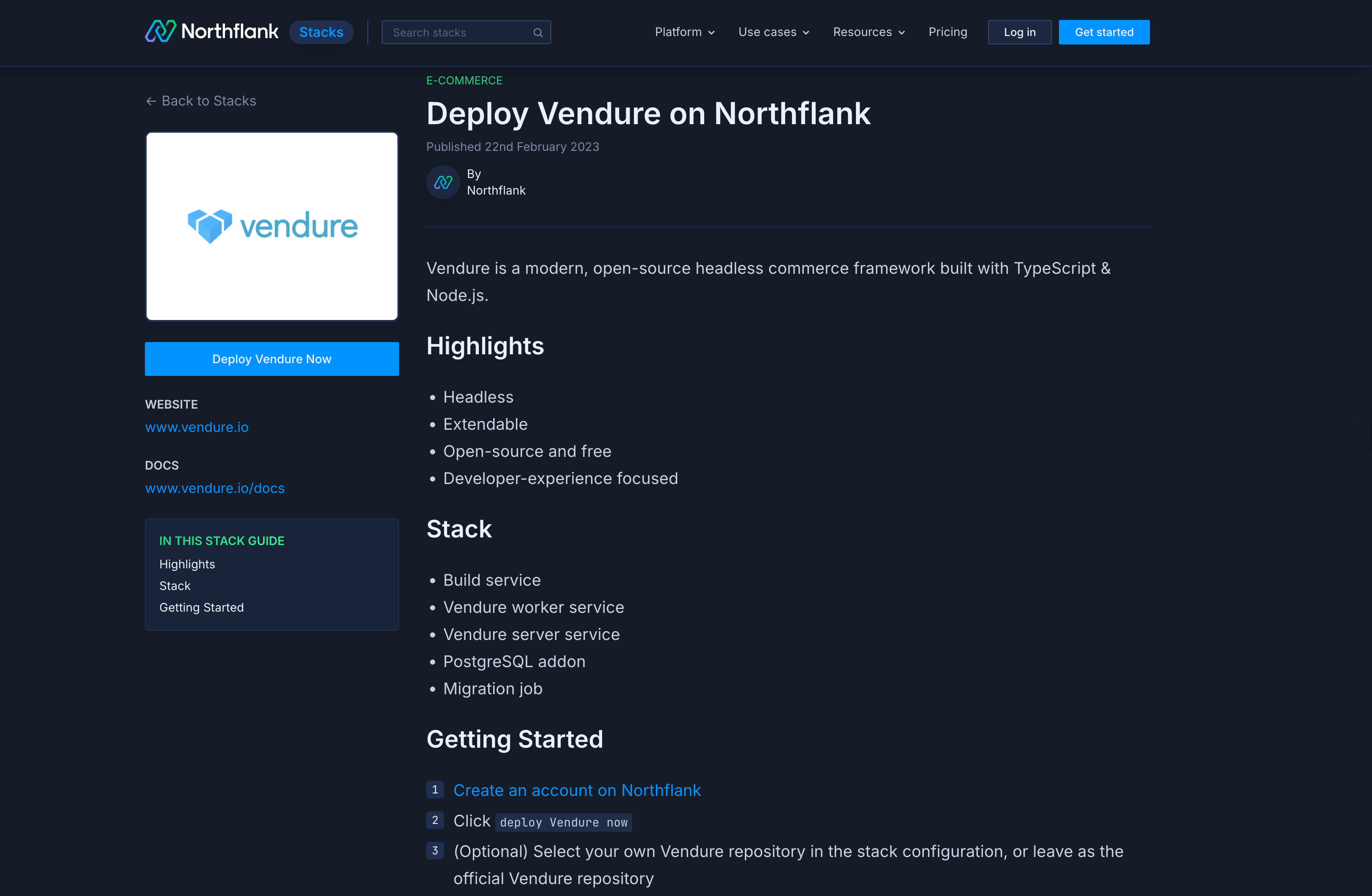
Northflank is built for containerized applications from the ground up. The Vendure deployment guide shows deploying a complete headless commerce stack with databases, monitoring, and automated deployments in a few minutes for running production headless commerce.
The right ecommerce hosting, whether that’s managed Magento hosting or another approach, depends on what you’re building and who’s building it.
All-in-one platforms like Shopify and BigCommerce work for standard retail stores. WordPress hosting suits content-heavy sites.
For teams building custom e-commerce platforms with modern frameworks or headless commerce, Northflank provides complete infrastructure with managed databases, automated deployments, and the flexibility to host in your own cloud.
Start hosting on Northflank, browse the documentation, or book a demo to discuss your infrastructure needs.