
Best cloud hosting in 2026: 9 platforms and providers compared
The best cloud hosting in 2026 comes down to a trade-off between infrastructure control and developer productivity. This guide compares 9 cloud hosting providers and platforms across deployment models, pricing, and workload support so you can choose based on your requirements.
- Northflank – Deploy any workload (apps, databases, AI/ML with GPUs) in Northflank's cloud, your own cloud (AWS, Azure, GCP, Oracle, Civo, CoreWeave, bare-metal), or your customer's infrastructure. Transparent pricing with a free sandbox, pay-as-you-go self-service, and an enterprise tier for custom SLAs.
- Render – Heroku alternative with automatic Git deployments, managed PostgreSQL and Redis, static sites with global CDN
- Railway – Template marketplace, Railpack or Dockerfile builds, automated service discovery with internal networking
- Fly.io – Global edge deployment with Firecracker microVMs
- AWS – Comprehensive service catalog with 200+ services including EC2, S3, RDS, Lambda across 30+ regions
- Azure – Microsoft ecosystem integration with Windows Server, .NET, Active Directory, hybrid cloud support
- GCP – Vertex AI, BigQuery, GKE (Google Kubernetes Engine), multi-region deployment
- DigitalOcean – Droplets (VMs), managed Kubernetes, managed databases (PostgreSQL, MySQL, Redis)
- Vultr – Cloud compute, bare metal servers, block storage across 32 global locations
Why Northflank bridges both categories: Most cloud hosting forces you to choose between simplicity (Heroku, Render) and control (AWS, Azure). Northflank's Bring Your Own Cloud model lets you deploy in your own cloud accounts while getting a fully managed platform. You avoid vendor lock-in, use existing cloud credits, and maintain data sovereignty, without managing Kubernetes yourself.
Cloud hosting runs applications on virtual servers distributed across multiple data centers, with resources allocated on demand rather than tied to a single physical machine. Two main categories exist:
- Traditional cloud providers (AWS, Azure, GCP) give you virtual machines, object storage, and managed databases. You configure everything.
- Modern cloud platforms (Northflank, Render, Railway) abstract infrastructure with built-in CI/CD, auto-scaling, and GitOps workflows. You deploy code, they handle infrastructure.
The best cloud hosting option for your team depends on which side of that split your requirements fall on, or whether you need a platform that covers both.
Modern platforms abstract infrastructure complexity while maintaining enterprise capabilities. Here are the leading options:
Northflank addresses the core problem with cloud hosting: you shouldn't have to choose between simplicity and control.
Traditional PaaS platforms (Heroku, Render) run on their own infrastructure, which means you can't deploy in your own cloud account. Traditional cloud (AWS, Azure) requires dedicated DevOps teams. Northflank's Bring Your Own Cloud architecture gives you both: a managed platform experience while running in your own AWS, Azure, GCP, Oracle, Civo, CoreWeave, bare-metal, or on-premise infrastructure.
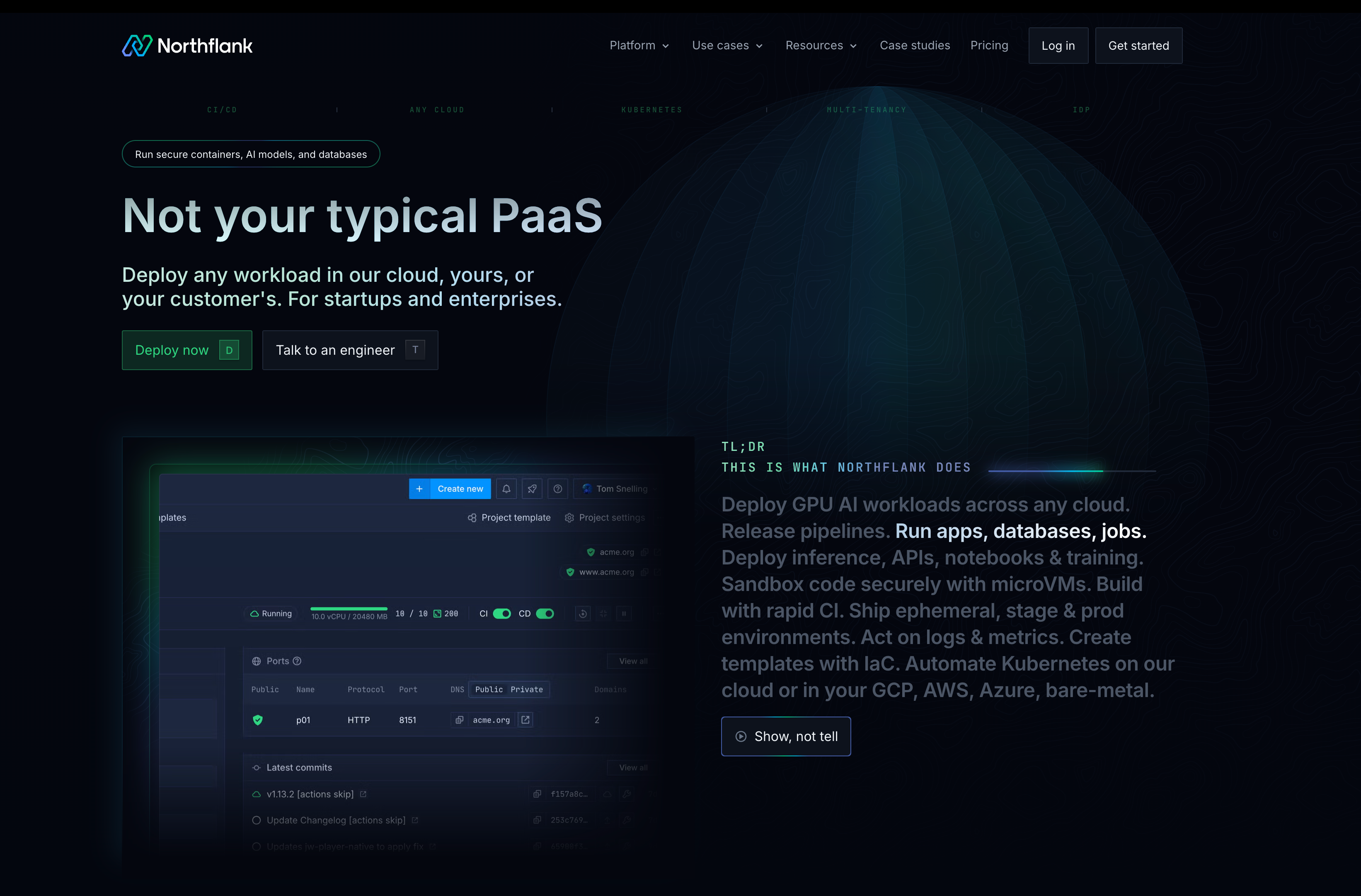
What Northflank offers:
- Deploy to 6+ managed cloud regions and 600 BYOC regions for global reach and data residency
- Built-in CI/CD pipelines, GitOps workflows, and preview environments for every pull request
- Managed databases (PostgreSQL, MySQL, MongoDB, Redis) with automated backups and scaling
- GPU orchestration for AI workloads including NVIDIA A100, H100, H200, B200, and more GPU options
- Kubernetes-powered for production-grade reliability, without requiring Kubernetes expertise
Pricing:
Northflank offers transparent usage-based pricing with three tiers:
- Free sandbox tier: Get started at no cost with always-on compute, 2 free services, 1 free database, and 2 free cron jobs for testing
- Pay-as-you-go tier: Self-service with minimal restrictions. Pay only for what you consume:
- Compute: $0.01667 per vCPU/hour, $0.00833 per GB memory/hour
- Storage: $0.15 per GB/month for NVMe disks
- Networking: $0.06 per GB data transfer
- Managed databases: PostgreSQL, MongoDB, Redis, and MySQL included
- Enterprise tier: Custom requirements, SLAs, white-label options, always-on support, and BYOC (Bring Your Own Cloud) deployment to AWS, GCP, Azure, Oracle, Civo, CoreWeave, on-premises, or bare-metal infrastructure
Use the pricing calculator to estimate costs. With BYOC, you pay a platform fee while consuming compute through your own cloud provider, leveraging existing credits and commitments.
Best for:
- Teams wanting a managed platform experience without vendor lock-in
- Enterprises with data sovereignty and compliance requirements
- Organizations leveraging existing cloud credits (AWS, Azure, GCP)
- AI/ML workloads requiring GPU orchestration
- Companies migrating from Heroku or traditional PaaS
- DevOps teams needing Kubernetes benefits without operational overhead
Why choose Northflank over alternatives:
- vs Heroku/Render: You own the infrastructure, use existing cloud credits, no vendor lock-in
- vs AWS/Azure/GCP: Managed platform removes DevOps overhead while you keep control
- vs other BYOC platforms: Full-stack (apps, databases, CI/CD, monitoring), not just orchestration
Learn more about private cloud deployments, a comparison of platforms offering dedicated infrastructure and data residency, and managed cloud hosting, an explainer on what managed hosting includes and when to use it.
Try Northflank free, book a demo, or request GPU access for AI workloads.
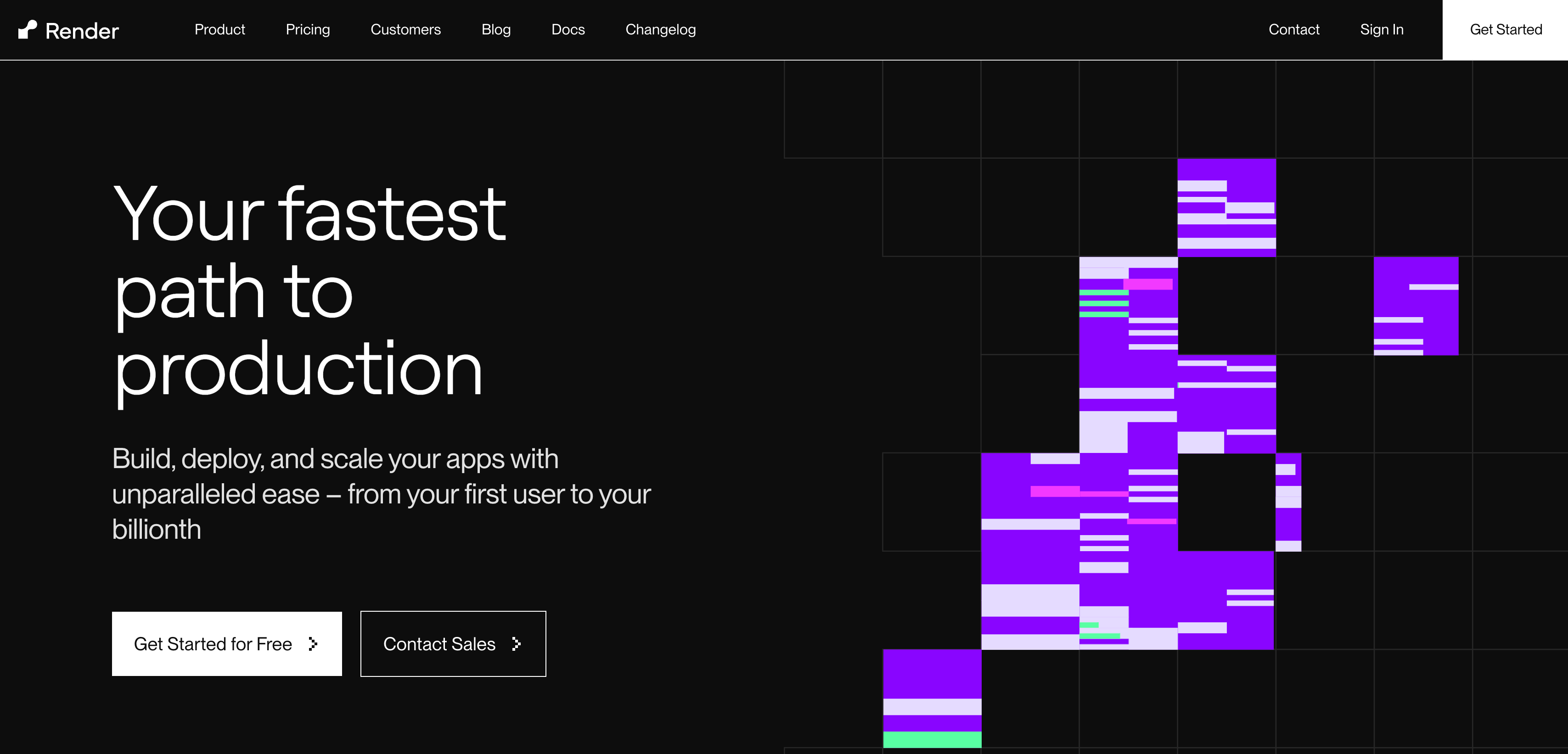
Render provides automatic deployments from Git with native support for static sites, web services, and databases.
What Render offers:
- Automatic builds and deployments from GitHub, GitLab
- Managed PostgreSQL and Redis with automated backups
- Static sites with global CDN distribution
- Zero-downtime deployments with health checks
- Preview environments for pull requests
Best for: Teams migrating from Heroku, full-stack applications requiring managed databases.
Compare Render vs Heroku, a direct comparison of the two platforms, or see Render alternatives for other options in this category.
Railway provides a template marketplace and automated service discovery for rapid deployment.

What Railway offers:
- Deploy from templates or connect GitHub repositories
- Railpack or Dockerfile-based builds
- Automated service discovery with private networking
- Scheduled jobs using crontab expressions
- Multi-region replica deployment
Best for: Side projects, early-stage startups, developers wanting rapid deployment from templates.
Fly.io runs containers globally using Firecracker microVMs optimized for low latency.

What Fly.io offers:
- Global deployment across multiple regions
- Firecracker microVMs for fast cold starts
- Automatic HTTPS and custom domains
- WireGuard-based private networking
- Persistent volumes for stateful applications
Best for: Applications requiring global low latency, edge computing use cases, containerized workloads.
Traditional cloud hosting providers offer infrastructure-level control with comprehensive service catalogs. They require dedicated DevOps expertise but provide maximum flexibility for custom architectures:
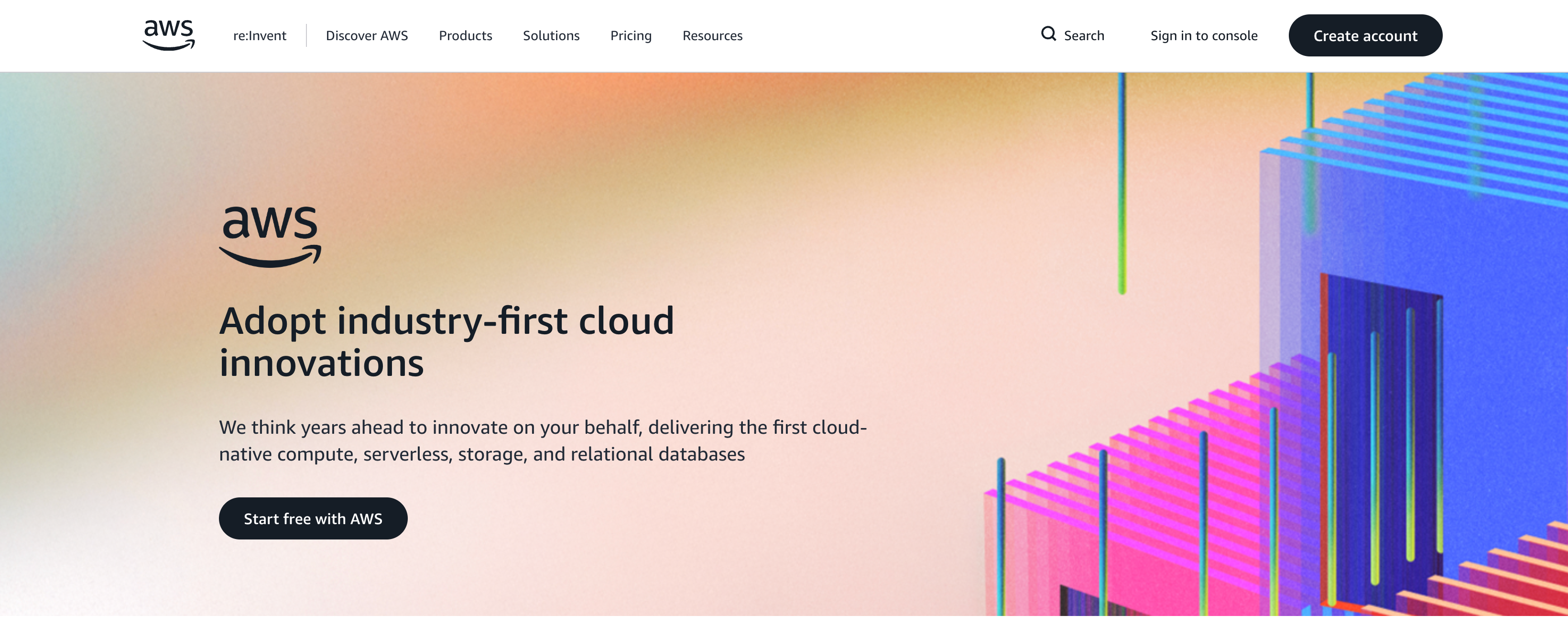
AWS provides the most extensive cloud service catalog with global infrastructure and deep service integration.
What AWS offers:
- EC2 compute instances with extensive configuration options
- RDS managed databases (PostgreSQL, MySQL, Oracle, SQL Server)
- Lambda serverless compute
- VPC networking with granular security controls
- 200+ services across compute, storage, databases, ML, analytics
Best for: Enterprises with dedicated DevOps teams, applications requiring AWS-specific services, organizations needing maximum service breadth.
Trade-off: Requires significant operational expertise, complex billing structure, steep learning curve.
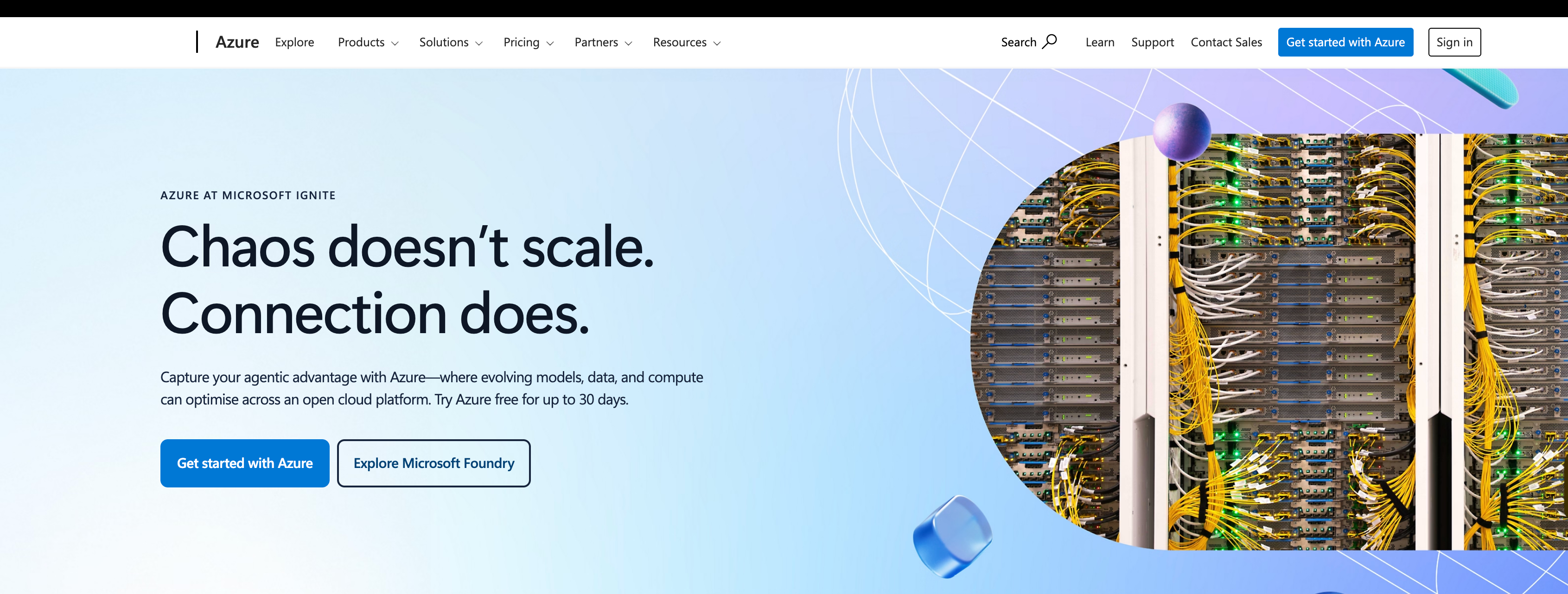
Azure provides tight integration with Microsoft technologies and comprehensive enterprise tooling.
What Azure offers:
- Virtual Machines with Windows and Linux support
- Azure Active Directory for identity management
- Hybrid cloud with Azure Arc and Azure Stack
- .NET application hosting and development tools
- Blob Storage and Azure SQL Database
Best for: Microsoft-centric organizations, hybrid cloud deployments, enterprises requiring extensive compliance certifications.
Trade-off: Less flexible outside the Microsoft ecosystem.
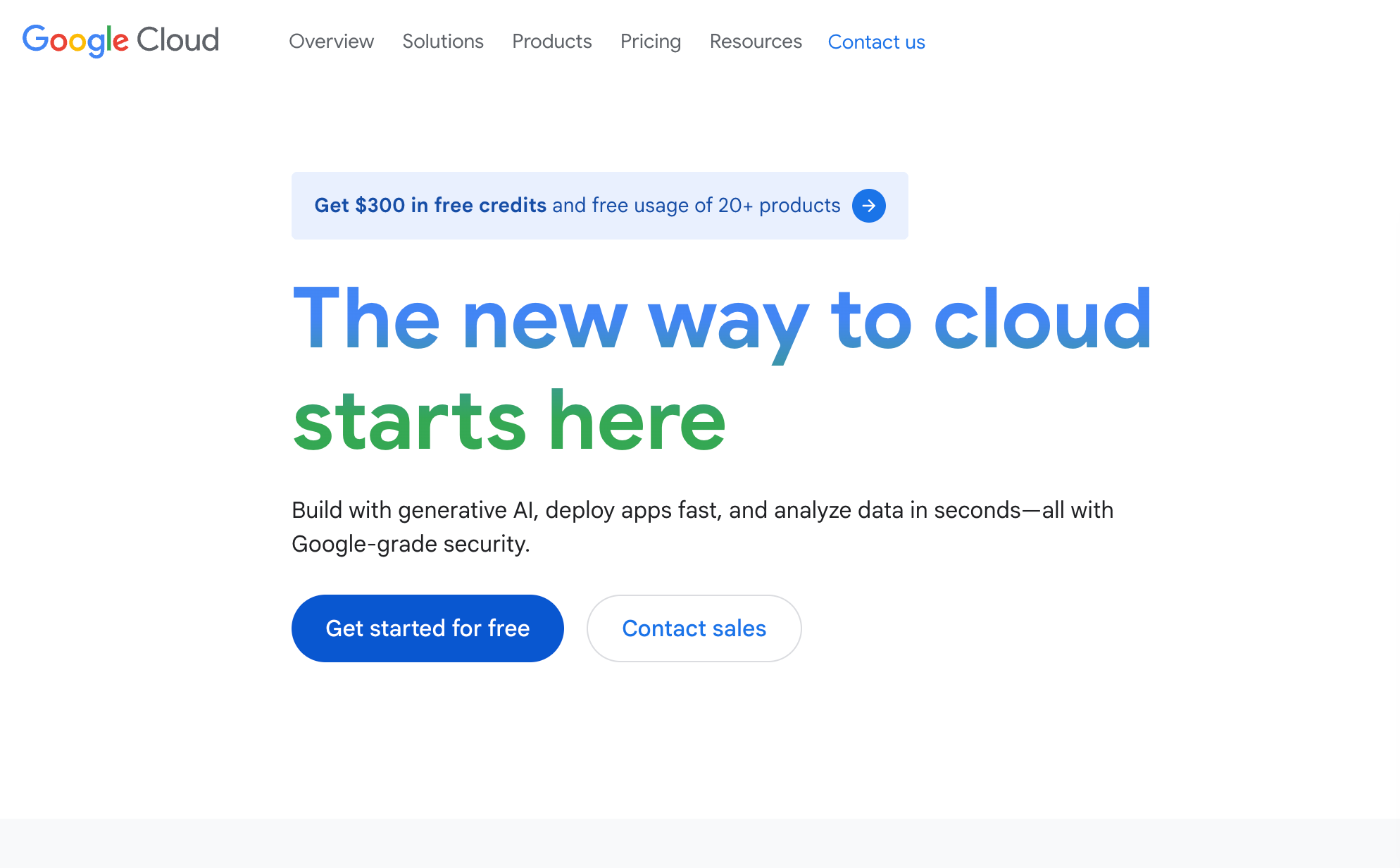
Google Cloud specializes in data analytics, machine learning, and Kubernetes orchestration.
What GCP offers:
- Vertex AI for machine learning model training and deployment
- BigQuery for data analytics
- Managed Kubernetes with GKE
- Compute Engine with sustained use discounts
- Cloud Storage with multiple storage classes
- Multi-cloud portability with Anthos
Best for: Data-intensive applications, AI/ML workloads, Kubernetes-native development, teams prioritizing data analytics.
Trade-off: Smaller service catalog compared to AWS.
DigitalOcean provides cloud infrastructure with straightforward configurations and predictable pricing.

What DigitalOcean offers:
- Droplets with fixed resource configurations
- Managed Kubernetes for container orchestration
- Managed databases with automated backups
- Spaces object storage compatible with S3 API
- App Platform for application deployment
- Load balancers and block storage
Best for: SMBs, developers learning cloud infrastructure, teams wanting simplified management.
See DigitalOcean alternatives, a comparison of platforms with similar pricing models and managed services.
Vultr provides high-performance compute options with bare metal availability.

What Vultr offers:
- Cloud Compute instances with hourly billing
- Bare Metal servers for dedicated hardware
- Block Storage for persistent volumes
- Object Storage compatible with S3
- DDoS protection included
- 32 data center locations globally
Best for: Performance-critical applications, teams requiring bare metal servers, global distribution needs.
Different platforms suit different needs. Use this decision framework to match your requirements with the right solution:
| Choose this | If you need |
|---|---|
| Traditional cloud (AWS/Azure/GCP) | Dedicated DevOps engineers available, specific services only major providers offer, custom infrastructure architectures, enterprise cloud agreements already in place |
| Modern platforms (Northflank/Render/Railway) | Focus on code instead of infrastructure, minimal DevOps resources, developer productivity over granular control, standard web applications or APIs |
| Northflank specifically | Modern platform experience with enterprise control, BYOC (Bring Your Own Cloud) to avoid vendor lock-in, GPU orchestration for AI workloads, data sovereignty and compliance controls, leverage existing cloud credits while getting managed benefits |
Beyond standard web applications, certain workloads require specific infrastructure capabilities. Here's how different platforms handle specialized deployment needs:
For organizations requiring complete infrastructure control and data residency, private cloud hosting, a comparison of platforms offering dedicated infrastructure, covers the available options. Northflank's BYOC model provides private cloud benefits with managed platform simplicity.
Running across multiple clouds prevents vendor lock-in and optimizes costs. Northflank's multi-cloud platform supports deployment to 6+ managed cloud regions and 600+ BYOC regions across AWS, Azure, GCP, Oracle, Civo, CoreWeave, on-premise, and bare-metal. This guide on multi-cloud vs hybrid cloud explains the difference between the two approaches.
GPU-intensive applications need specialized infrastructure. Northflank offers native GPU support (H100, B200, and more) with fractional GPU allocation. Traditional cloud providers require manual configuration of GPU instances and orchestration.
It depends on your requirements. AWS, Azure, and GCP offer the broadest service catalogs but require DevOps expertise. Northflank offers a managed platform that deploys into your own cloud account, which suits teams that want infrastructure control without operational overhead.
The three largest cloud hosting providers are AWS, Azure, and GCP, followed by DigitalOcean and Vultr for simpler infrastructure needs. Platforms like Northflank, Render, and Railway sit on top of cloud infrastructure and manage deployment, CI/CD, and databases for you.
Web hosting typically places your site on a single shared or dedicated server. Cloud hosting distributes applications across virtualized infrastructure in multiple data centers, with resources allocated on demand. Cloud hosting supports containers, databases, and background workloads beyond serving websites.
Ecommerce workloads need managed databases, autoscaling for traffic spikes, and zero-downtime deployments. Modern platforms like Northflank and Render include these by default. Traditional providers like AWS support them but require you to configure scaling, load balancing, and failover yourself.
Managed cloud hosting means the vendor operates the platform layer, including deployments, scaling, and databases. Northflank, Render, and Railway all provide managed hosting; Northflank additionally runs as a managed platform inside your own cloud account through BYOC.
For most production applications, yes. Cloud hosting provides on-demand scaling, redundancy across data centers, and managed services that traditional single-server hosting does not. Traditional hosting can still fit small static sites with predictable, low traffic.
Cloud hosting divides into two categories: traditional providers (AWS, Azure, GCP) offer maximum control but require DevOps expertise, while modern platforms (Render, Railway) prioritize simplicity but run only on their infrastructure.
Northflank bridges this gap. Deploy in your own cloud account (AWS, Azure, GCP, Oracle, Civo, CoreWeave, bare-metal, or on-premise) while getting a fully managed platform. You maintain infrastructure ownership, use existing cloud credits, and avoid vendor lock-in, without managing Kubernetes yourself.
For teams building modern applications, especially those with enterprise requirements or AI workloads, Northflank provides both developer productivity and infrastructure control.
Try Northflank free, book a demo, or request GPU access for AI workloads.
These guides provide deeper insights into cloud hosting options, platform comparisons, and deployment strategies:
- Best cloud application hosting platforms: compares platforms for deploying full applications, including APIs, workers, and databases
- 7 best private cloud hosting platforms: covers platforms offering dedicated infrastructure and data residency controls
- What is managed cloud hosting?: explains what managed hosting includes and when it fits
- Best PaaS that runs in your own cloud account: reviews self-hosted and BYOC PaaS options
- Best multi-cloud management platforms: compares platforms for running workloads across multiple cloud providers