
Enterprise vibe coding: how to deploy AI-generated apps safely
- Enterprise vibe coding requires the same deployment controls as any production application: secrets management, scoped database credentials, environment isolation, RBAC, audit logging, and sandbox execution for apps that run AI-generated code at runtime.
- The security risks in vibe-coded apps are concentrated at deployment, not in the generated code itself. Hardcoded credentials, admin database access, no environment isolation, and no access controls on deployed URLs are the most common failure modes.
- At scale in large enterprises, the governance gap compounds: dozens of employees ship AI-generated apps to production without IT visibility, creating an audit surface that security teams cannot see or control.
- Northflank provides the deployment infrastructure that makes enterprise vibe coding safe: secrets management, managed databases, sandbox isolation, RBAC, audit logs, preview environments, and BYOC into your own cloud or on-premises.
Northflank is a full-stack cloud platform that handles the infrastructure enterprises need to deploy vibe-coded apps safely. Secrets management, managed databases, microVM sandbox isolation for AI-generated code execution, RBAC, audit logs, preview environments, and self-serve BYOC into AWS, GCP, Azure, and on-premises. Sign up to get started or book a demo.
Enterprise vibe coding is already happening. Employees are generating and deploying internal apps with AI, often without involving engineering or security teams. The bottleneck is no longer writing code. It is controlling what gets deployed, what data it touches, and whether it creates a security incident the moment it goes live.
This article explains where enterprise vibe coding creates real risk, why the problem sits at the deployment layer, and what infrastructure is required to make it safe at scale.
AI coding tools generate working applications quickly. They do not generate secure deployment configurations by default.
AI-generated code does introduce vulnerabilities. But those vulnerabilities only become critical when the app is deployed with production access, real data, and no isolation.
The deployment gap is where incidents happen. A prototype is low risk. The same app deployed with hardcoded credentials, admin database access, and no access controls is not.
Non-technical employees generate code, deploy it, and move on. The platform they use, and whether it enforces security controls by default, determines whether that app stays internal or becomes a security incident.
Consumer vibe coding tools are built for speed, not governance. They lack the controls enterprises rely on: staging environments, security reviews, RBAC, SSO, and audit trails.
At scale, this creates a governance gap. Vibe coding is not a single-app problem. It becomes a distributed shadow engineering layer, where dozens of employees can build and deploy apps outside IT and security visibility.
The result is an expanding attack surface: apps touching production data with unclear ownership, shared credentials in repositories, and internal tools exposed without proper access controls. Security teams cannot govern what they cannot see.
The only viable response is not restriction, but infrastructure-level control: a deployment layer that enforces security defaults, centralizes visibility, and makes safe deployment the path of least resistance.
Enterprise vibe coding is ultimately a shift in who can ship software. That makes the deployment layer the new control plane for risk.
These are the controls that must exist at the deployment layer for vibe-coded apps to be safe in enterprise environments.
- Secrets management: API keys, database credentials, and environment variables must be stored in a secrets manager and injected at runtime. They must never appear in source code, build logs, or repositories. AI coding tools regularly include credentials in generated code. The deployment platform must intercept this before it reaches production.
- Scoped database credentials: Vibe-coded apps default to whatever database access is easiest to configure, which is typically admin access. Production apps should connect with the minimum permissions required, not shared admin accounts.
- Environment isolation: Development and production environments must be separated. Testing changes on a live application that other employees or customers depend on is a common failure mode for vibe-coded internal tools.
- RBAC and access controls: Deployed apps should only be accessible to the intended audience. IT and security teams need role-based access controls at the project and environment level to enforce least-privilege access and satisfy audit requirements.
- Audit logging: Every deployment, every secret access, every environment change needs to be logged with a timestamp and a user identity. SOC 2 Type 2 audits require demonstrable audit trails. Enterprise security incidents require forensic evidence of what happened and when.
- SSO integration: Enterprise teams require SAML or OIDC-based SSO for centralized identity management. Apps deployed outside the SSO perimeter are invisible to the identity provider and cannot be governed.
- Sandbox execution for AI-generated code: Any app that executes code at runtime, including AI coding assistants, code interpreter features, and agentic workflows, needs microVM isolation so execution cannot affect the host system or other users. Standard container isolation shares the host kernel and is not sufficient.
- Preview environments: Every change needs to be testable in an isolated environment before it reaches production. Preview environments that spin up per pull request and tear down on merge make this the default rather than the exception.
Northflank provides the deployment infrastructure that applies these controls by default, without requiring vibe coders to understand the infrastructure layer or IT teams to manually review every deployment.
Connect a Git repository, and Northflank detects the framework, builds the application, and deploys it with TLS, health checks, and environment isolation configured automatically. Secrets are stored in secret groups and injected at build and runtime, never exposed in logs or code. Managed databases (PostgreSQL, MySQL, MongoDB, Redis) provision in minutes with scoped credentials injected through the same mechanism. For apps that execute AI-generated or user-submitted code at runtime, Northflank's sandbox infrastructure runs microVM-backed execution using Kata Containers, Firecracker, and gVisor, so execution is contained at the hardware level.
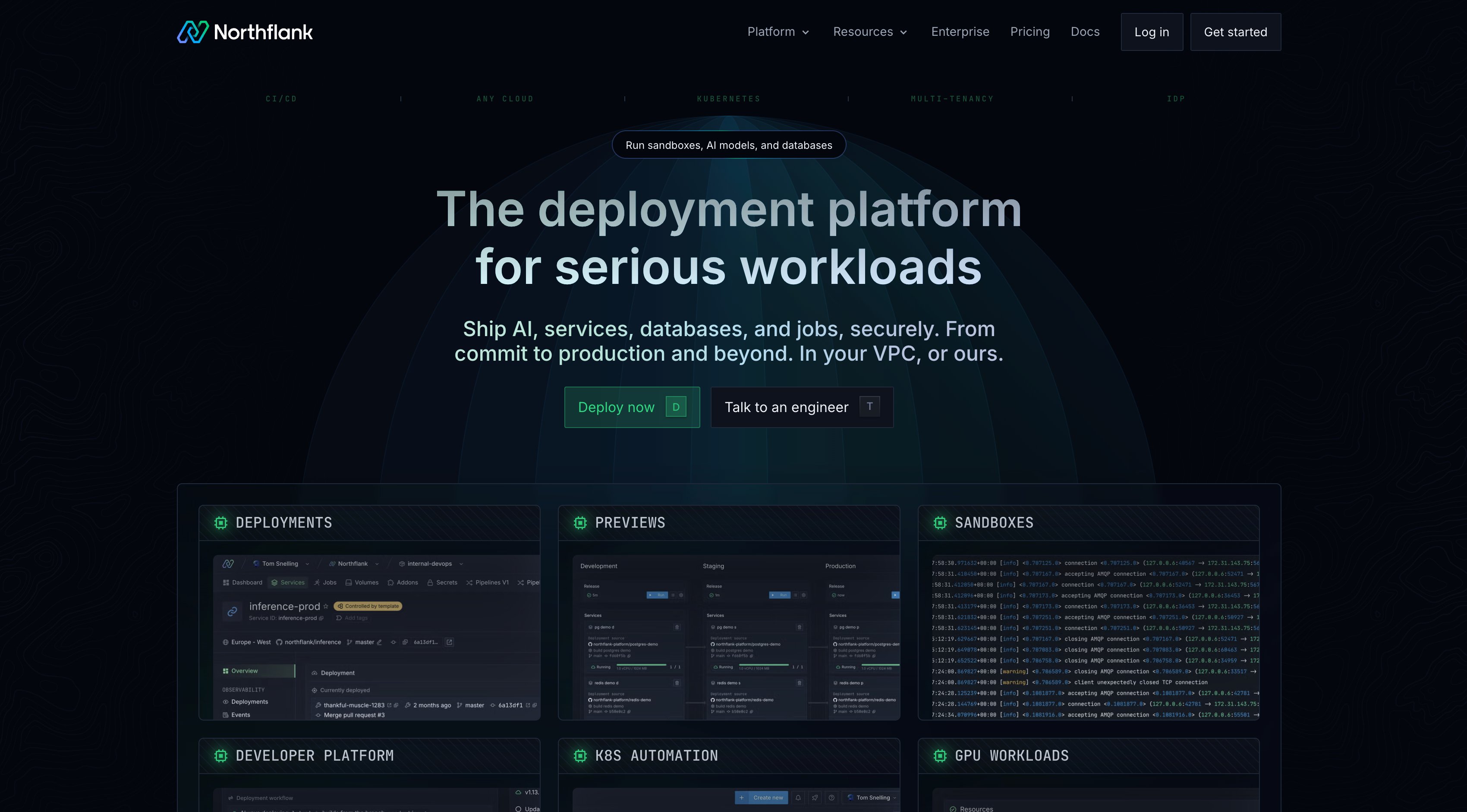
For enterprise IT and security teams, Northflank provides the organizational visibility that governance requires. RBAC at the organisation, project, and environment level means every deployment is tied to a user identity, every secret access is logged, and every environment is visible to the security team. Non-technical employees get self-service. The security team gets oversight and a full audit trail. SAML and OIDC-based SSO with automatic role assignment from identity provider groups integrates with existing enterprise identity infrastructure.
BYOC is self-serve into AWS, GCP, Azure, Oracle, CoreWeave, Civo, on-premises, and bare-metal. For enterprises with data residency requirements or existing cloud commitments, vibe-coded apps run inside your own infrastructure with your data never leaving your own VPC. Northflank is SOC 2 Type 2 compliant and HIPAA compliant, and signs BAAs with customers whose vibe-coded apps touch PHI, on managed cloud and BYOC alike.
For a step-by-step walkthrough of the full deployment process, see How to deploy vibe-coded apps to production on Northflank.
Get started on Northflank (self-serve, no demo required). Or book a demo to walk through your enterprise deployment requirements.
Before any vibe-coded app reaches production in an enterprise environment, verify the following:
- Secrets and credentials are stored in a secrets manager, not in source code or environment files committed to a repository.
- Database connections use scoped credentials with minimum required permissions, not admin accounts.
- The app is deployed behind SSO and is not accessible via a public URL without authentication.
- RBAC controls are in place, limiting access to the intended audience.
- Development and production environments are separated with no shared state.
- A preview environment has been used to test changes before they reached production.
- Audit logging is enabled, and logs are retained for the duration required by your compliance framework.
- Any code execution features use sandbox isolation, not standard container execution.
- The deployment is visible to the IT or security team through the centralized control plane.
AI coding tools generate code that works functionally but frequently includes security flaws. Georgetown CSET found XSS vulnerabilities in 86% of AI-generated code samples tested across five major LLMs. AI-assisted commits expose secrets at twice the rate of human-written code. The tools optimize for generating code that runs, not for generating code that is secure. Human review is still required for security-sensitive logic.
Hardcoded credentials are the most common and highest-impact failure mode. AI tools regularly include API keys, database passwords, and access tokens directly in generated code or configuration files. When that code is pushed to a repository, the credentials are exposed to anyone with repository access, and often to public search engines if the repository is public.
Use a deployment platform that applies security controls by default rather than relying on individual builders to configure them. Secrets management, RBAC, SSO integration, and audit logging should be configured at the platform level so they apply to every deployment regardless of who built the app. Non-technical employees get self-service. IT and security teams get visibility and control without reviewing every deployment manually.
Any app that executes code at runtime rather than just running pre-written application logic needs sandbox isolation. This includes apps with AI coding assistant features, code interpreter functionality, agentic workflows, or any feature that executes user-submitted input as code. Without microVM isolation, a single bad execution can compromise the host application and expose other users' data.
Yes, if they are deployed with the right infrastructure controls. SOC 2 Type 2, HIPAA, and other compliance frameworks require secrets management, RBAC, audit logging, and access controls. These controls need to exist at the deployment platform level, not in the generated code itself. Platforms like Northflank apply them by default and provide the audit trails that compliance reviews require. Northflank holds SOC 2 Type 2 certification, is HIPAA compliant, and signs BAAs for customers processing PHI, so the compliance foundation is already in place at the platform level.
BYOC (Bring Your Own Cloud) deploys the platform into your existing AWS, GCP, Azure, or on-premises infrastructure. Your data never leaves your own VPC. For enterprises with data residency requirements or existing cloud commitments, BYOC means vibe-coded apps benefit from enterprise-grade deployment infrastructure without routing data through a third-party vendor's systems.
Enterprise vibe coding is not a security problem that can be solved at the code level. The vulnerability classes appearing in AI-generated code are real, but the production incidents happen at the deployment layer: hardcoded credentials, admin database access, apps deployed to public URLs without authentication, and no audit trail for what got deployed or who deployed it.
The infrastructure layer is where the security gap has to be closed. Secrets management, RBAC, audit logging, SSO, sandbox execution for runtime code, and IT visibility over all deployments are not optional at enterprise scale. Northflank provides all of it by default, on managed cloud or inside your own infrastructure, without requiring vibe coders to understand what they are deploying on top of.
Sign up for free on Northflank or book a demo to see how Northflank handles enterprise vibe coding deployment for your organization.
- How non-technical employees can build and ship internal apps with AI, securely: Covers the full deployment workflow for AI-generated apps, including secrets management, sandbox execution, and enterprise visibility.
- Best deployment platforms for vibe coders in 2026: A comparison of Northflank, Vercel, Render, Railway, and Fly.io on databases, secrets management, preview environments, and full-stack scope.
- Best enterprise-safe platforms for running and hosting AI apps in 2026: Covers SOC 2, HIPAA, BYOC, sandbox isolation, and GPU support for enterprise AI app deployment.
- How to deploy vibe-coded apps: A step-by-step walkthrough of taking a vibe-coded app from localhost to a live HTTPS URL on Northflank.